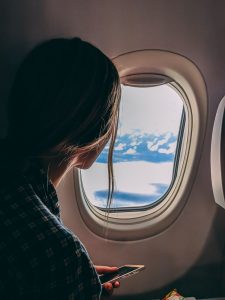


Neck pain after travel is so common that many people accept it as an unavoidable consequence of flying or long drives. Stiff necks, tension headaches, and shoulder ache all stem from poor head and neck support during transit. With the right pillow and positioning knowledge, travel-related neck pain is largely preventable. Understanding the biomechanics of seated sleeping helps you choose and position a pillow that protects your cervical spine rather than stressing it.
Why Travel Causes Neck Pain
Your cervical spine (the seven vertebrae in your neck) maintains a natural C-shaped curve called lordosis. When you fall asleep in a seated position without support, gravity pulls your head forward and downward. A typical adult head weighs roughly five kilograms. When the head drops forward even 15 degrees, the effective load on the neck muscles increases dramatically. At 45 degrees (a common sleeping head-droop angle), the neck muscles bear three to four times the head’s resting weight.
Sustained forward head position compresses the front of the cervical discs and stretches the posterior ligaments. After several hours, this causes the stiffness and pain that travellers experience upon waking. Lateral head drop (falling to one side) creates asymmetric compression that is even more painful because one side of the neck bears all the load while the other side overstretches.
A properly positioned pillow prevents both forward and lateral head drop by filling the space between the head and the seat structure. The pillow catches the head before it moves far enough to stress the cervical spine, maintaining alignment close to the natural lordotic curve.
Pillow Positioning for Neck Protection
A neck pillow should sit at the base of the skull, not around the middle of the neck. The occipital ridge (the bony bump at the back of the skull, just above where the neck begins) is the anchor point. Position the pillow so its thickest part supports this ridge, preventing the head from dropping backward or forward past the pillow’s support zone.
The lateral wings of a U-shaped neck pillow should reach far enough forward to catch the jaw. If the wings are too short, the head drops sideways past them and receives no lateral support. If the wings are too long, they push the jaw upward uncomfortably. Test wing length before buying: the tips should sit roughly level with the corners of the jaw when the pillow is positioned correctly.
Headrest interaction matters. Many airplane and car headrests push the head forward because they are positioned too far from the seat back or angled incorrectly. A neck pillow placed between the head and an overly forward headrest corrects this positioning by filling the gap at the back of the head. Without the pillow, the headrest pushes your head into a chin-forward position that strains the neck over hours of travel.

napfun Neck Pillow for Traveling
Choosing Firmness for Neck Support
Soft pillows feel comfortable initially but compress under the head’s weight during sleep, eventually providing little support. For seated travel where gravity constantly loads the pillow, medium-firm to firm support prevents this compression. Memory foam provides an excellent balance: it softens enough to contour to the neck shape but maintains enough structure to support the head without bottoming out.
Microbeads (tiny polystyrene beads) shift and redistribute under load, which feels pleasant but provides inconsistent support during sleep. When your head drops sideways against a microbead pillow, the beads flow away from the pressure point rather than supporting against it. For travellers prone to neck pain, structured fills like memory foam or firm fibrefill outperform beads because they resist compression rather than yielding to it.
Orthopaedic contoured designs that are shaped to support the natural cervical curve provide the most anatomically correct support but are bulkier than simple U-shaped designs. For travellers with chronic neck issues or those recovering from cervical injuries, the extra bulk of a contoured travel pillow is justified by the superior support it provides.
Pre-Travel Neck Preparation
Gentle neck stretches before boarding reduce the baseline tension in neck muscles, making them less susceptible to strain during travel. Slowly tilt your head towards each shoulder (ear towards shoulder, without raising the shoulder) and hold for 15 to 20 seconds per side. Slowly rotate your head to look over each shoulder and hold for 15 seconds. Drop your chin towards your chest and hold for 15 seconds to stretch the posterior neck muscles.
Hydration affects neck comfort during travel. Dehydrated cervical discs are less resilient and more vulnerable to compression damage. Drink water before and during flights. The low humidity in aircraft cabins (typically 10 to 20 percent) accelerates dehydration, which combines with poor sleeping posture to increase neck pain risk. Keep a water bottle accessible throughout the flight.
Mid-Journey Position Changes
No single sleeping position works for an entire long-haul flight. Schedule position changes every one to two hours, even if this means briefly waking up. Alternate between leaning left, leaning right, and sitting upright. Each position distributes load to different muscles and ligaments, preventing any single structure from bearing prolonged strain.
Remove your pillow periodically and sit upright for five to ten minutes between sleeping sessions. Roll your shoulders, turn your head side to side gently, and shrug your shoulders up and down to restore blood flow to the neck muscles. These micro-breaks interrupt the sustained posture that causes stiffness and allow compressed discs to rehydrate slightly.
For car passengers, use stops at service stations to do standing neck stretches. Stand up straight, clasp your hands behind your back, and gently lift your chest while looking slightly upward. Hold for 15 seconds. Repeat two to three times. Standing stretches are more effective than seated stretches because they decompress the spine that has been loaded by sitting.
napfun Neck Pillow for Traveling
Post-Travel Recovery
If you arrive with neck stiffness despite pillow use, gentle heat applied to the neck muscles (a warm towel or a hot shower directed at the neck) relaxes tight muscles and improves blood flow. Avoid aggressive stretching of an already strained neck. Gentle movement within a comfortable range helps more than forcing the neck into stretched positions.
Sleeping the first night at your destination on a proper pillow with correct loft for your sleeping position allows the cervical spine to recover from travel compression. Our back sleeper guide and side sleeper guide cover the optimal loft and support for each sleeping position, which applies equally at home and in hotel accommodation after travel.
For chronic travel-related neck pain that persists beyond 48 hours after arrival, consider consulting a physiotherapist who specialises in cervical spine issues. Persistent pain suggests an underlying alignment or disc issue that pillows alone cannot address. A professional assessment can identify specific vulnerabilities and recommend targeted pillow choices for future travel.

Teresa created SaunaReviewer.com after discovering how transformative sauna therapy was in her own life. Today, she helps thousands of readers find reliable, honest information about saunas, accessories, and at-home wellness. Her mission is to make choosing the right sauna easier, clearer, and stress-free.